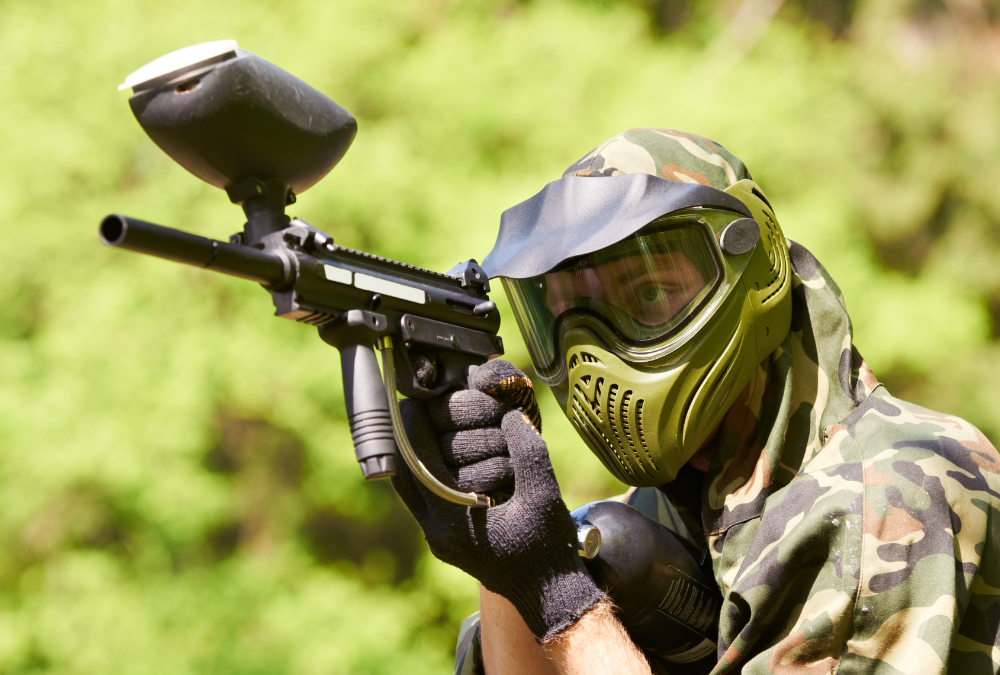
There’s a moment every new paintball player experiences that electric mix of excitement and “wait, do I actually know what I’m doing?” right before their first game. The good news? You don’t need to be a gear expert to have an incredible time and to know what works well on the field.
At American Paintball Coliseum, we’ve introduced thousands of first-timers to the sport across in the last 20+ years with our locations in Denver, Aurora, Colorado Springs, and Phoenix. We’ve heard every common question, seen all common rookie mistakes, and help teach people about how to improve their paintball game. This guide compiles our expert knowledge into everything we tell players when they are gearing up to play paintball at any level.
Whether you’re renting gear from our pro shop for the day or thinking about buying your own setup, here’s exactly what you need to know about paintball equipment.
The Right Paintball Gear Matters More Than You Think
Paintball is one of those sports where the right gear genuinely transforms the experience. The wrong mask will fog up at the worst moment. An air tank that is too large means you can’t feel the paintball gun properly. Wearing jeans instead of athletic paintball pants? You’ll be stiff, slow, and uncomfortable for how the game is played today.
When your gear fits right and works the way it should you can pay more attention to the gameplay, have confidence in your moves and can dial in your accuracy. Having the right gear also prepares you for a full day of fun.
Let’s break down the main pieces of gear you’ll encounter, from the essentials to the upgrades worth considering once you’re hooked.
The Non-Negotiables: Gear You Cannot Play Without
1. The Paintball Mask — Your Most Important Purchase
If there’s one piece of paintball gear worth buying correctly, it’s your mask. Full stop. A paintball travels at up to 300 feet per second. Protection and safety are second to none. Plus it is the piece of gear that is contact with your face, while you sweat and play. You don’t need the most expensive one. You should get the one that fits you the best.
A quality paintball mask needs to do three things.
- Protect your face, eyes, and ears from direct hits
- Give you a wide field of vision with high breathability
- Stay free of fog when you sweat and play through the day
That last point, fogging, is a common beginner problem that is easily solved and worth every penny. Paintball goggles that have thermal lenses (dual-pane, like double-glazed glass) eliminate fogging almost completely.
Single-lens masks are cheaper but your experience will suffer. You’ll spend half the game trying to clear fog which interrupts the thrill of the moment and can present a safety issue.
Trust us: spend the extra money for a good quality thermal lens goggle system.
2. The Paintball Marker (Gun) — Where Performance Lives
In paintball, we call it a marker, not a gun and there’s a real reason for that. A paintball marker is a precision piece of equipment with a lot more going on than a simple trigger mechanism. Understanding the basics helps you choose the right one and use it effectively.
There are three main categories of markers:
• Mechanical semi-automatic paintball marker: One shot per trigger pull. Reliable, easy to maintain, great for beginners and recreational players. Typically $100–$300.
• Electronic paintball markers: Battery-powered integrated paintball guns offer multiple firing modes, faster rates of fire, and programmable settings. Recommended for speedball players or the casual player looking for an upgrade. Prices range from $300–$2,000.
• Pump paintball markers: Manually pump between each shot. Slower fire rate, but requires more skill and accuracy. A favorite among experienced players who love a challenge.
For your first paintball experience, we recommend to simply use your field’s rental markers. The paintball guns from our pro shop are fully maintained, calibrated, and ready to go. Once you’ve played a couple times and know what style of play you enjoy, then it’s worth looking into buying your own paintball gun.
3. The Hopper (Loader) — Keeping You in the Fight
A hopper attaches to the feedneck on your paintball gun and feeds paintballs into the chamber ready to be fired. It sounds simple however there are details to hoppers that will vastly improve your performance.
Gravity-fed hoppers are the standard for casual and rental player. Their simple design make them cheap, allowing paintballs to drop in by gravity. They’re lightweight, and there’s nothing to charge or maintain. The downside is they can struggle to keep up if you’re firing fast. They’re prone to jams if you’re angling the marker at odd positions and can cause chopped paintballs by not settling in time to get shot.
Electronic hoppers actively push or agitate paintballs into the chamber, keeping pace with high rates of fire. If you invest in an electronic paintball marker, make sure to pair it with a loader that can keep up with it. Electronic hoppers can range in price between $60-$200+.
4. The Air Tank — The Power Behind Every Shot
Paintball guns require compressed gas to propel the paintball. You’ll encounter two types of ‘air’ in paintball: CO2 and High-Pressure Air (HPA aka compressed air).
CO2 tanks are less expensive and widely available, but can be inconsistent. They’re affected by temperature and conditions causing velocity changes and occasional liquid CO2 feeding into the marker, which isn’t ideal.
HPA tanks (also called nitrogen tanks) deliver consistent pressure regardless of weather, making them the preferred choice for serious players and the standard at most competitive fields. HPA tanks are easy to fill, safe and have a long life to them with prices ranging from $60 to $200+.
5. Paintballs — Not All Paint Is Created Equal
Here’s something a lot of beginners don’t know. The quality of your paintballs (paint) has a direct impact on accuracy, velocity, and even how your marker holds up over time. So what’s the difference?
Good paintballs are perfectly round with no dimples or flat spots. They have a clean seam in the shell that breaks with gentle impact but are strong enough to withstand being shot from a paintball gun. High quality paint and uses a bright, water-soluble, non-toxic fill that’s easy to wash out but hard to wipe off.
Mid-tier paintballs are often thicker, imperfect, and have a fill that is catered to easy cleaning and recreational use. This level of paintball can cause barrel breaks that require a frustrating mid-game clean and hinder accuracy.
Paintballs sold at American Paintball Coliseum are selected for the purpose. For Rocky Mountain Paintball League tournaments, we use the highest quality paintballs from reputable brands.
Regular play paintballs are all field-grade with attention to quality and handling for use and success in nearly all markers. Outside paintballs aren’t permitted on our fields to ensure consistent quality and safety for everyone.
What to Wear to Paintball: Clothing With Purpose
While specific clothing is not required to enjoy paintball, having gear that is specifically for playing has advantages. It’s your first layer of defense against paintball impacts, the playing surface, and serves as your comfort system for hours of running, crouching, and crawling across a field.
Jerseys: Find Your Identity
Jerseys can be generic or custom printed to represent which team you are on. A jersey is not required but acts as a piece of performance gear useful for regulating body temperature, getting dirty and is easily cleaned. Some jerseys also offer built in padding to help paintball bounces and contact with the ground.
Paintball Pants: Cut From a Different Cloth
Modern paintball pants are build with tough, cut-proof materials with attention towards reinforced seams and a fit that helps you on the field. Players can go as generic as a set of cheap cargo pants or purchase one of these high tech pieces of gear.
Either way, you will want to have something that covers your legs and is something you feel comfortable crawling around in.
Clothing: Layer Up and Move Freely
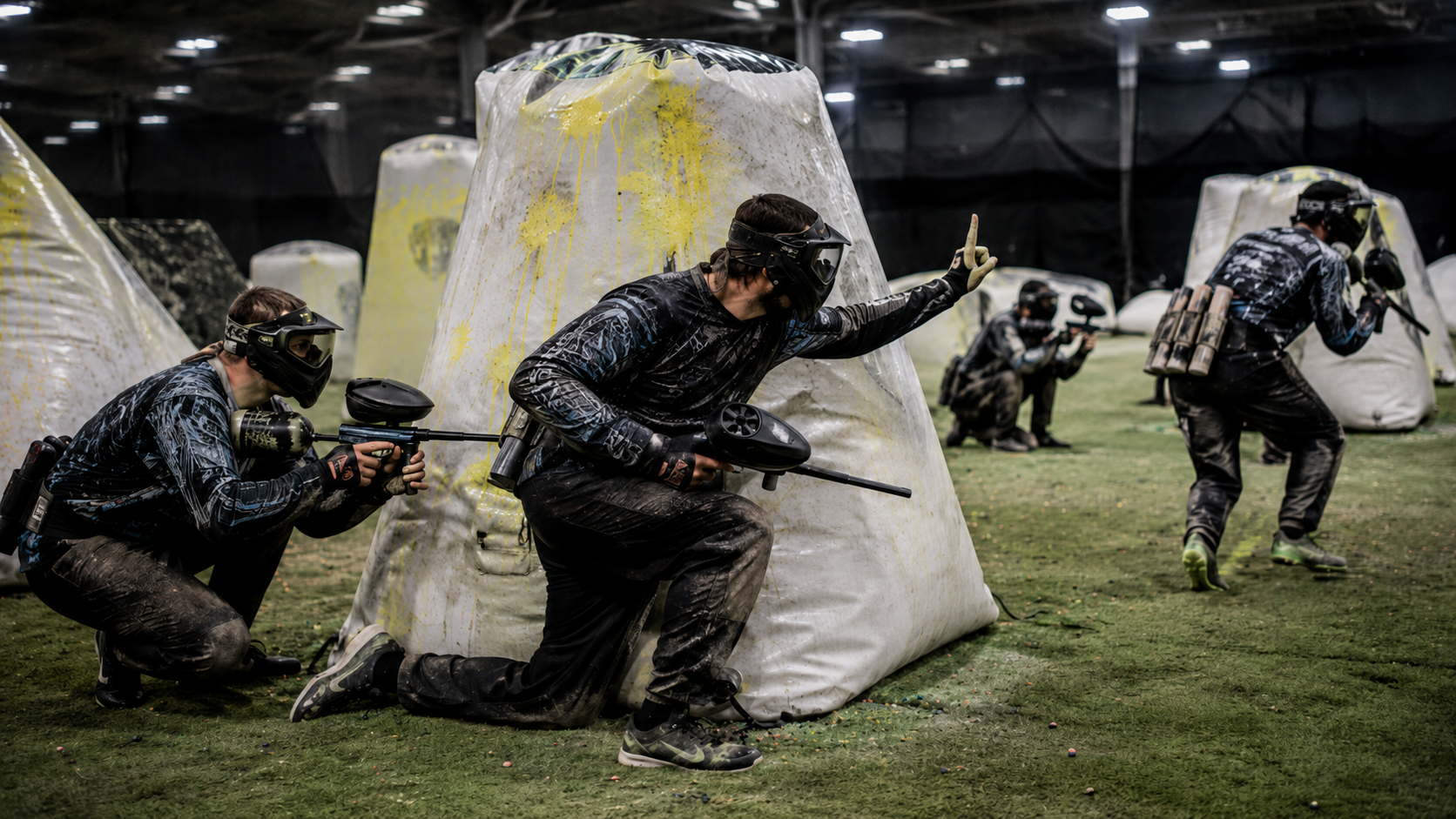
Long sleeves and full-length pants are non-negotiable. Exposed skin takes hits harder and bruises faster. Generally, you want paintball clothing that:
• Allows full range of motion (you’ll be sprinting, diving, and crawling)
• Is moisture-wicking to keep you dry as you heat up
• Is a style you think is cool and how you want to be represented on the field
• Is something you don’t mind getting paint on (it washes out, but wear something casual)
Cargo pants are the unofficial uniform of paintball. They’re durable, have useful pockets for accessories and squeegees, and provide decent natural padding. Athletic joggers or track pants work too. Jeans? Only if they’re stretchy but these are okay if you are just beginning. Paintball clothing can be pieced together but is an important part of your overall gear selection.
Footwear: Cleats or Boots?
Paintball fields are uneven (especially outdoor terrain) and you’ll be changing direction fast. Attention to your footwear is critical. Hiking boots are ideal for most paintball styles. Running shoes with low ankle support work in a pinch, but you’ll feel the difference on a long day of play.
Speedball players should consider getting a pair of cleats to play in. Cleats that can get dirty are the key. Get something that fits your feet well and is comfortable for prolonged use.
Avoid open-toe shoes, sandals, or anything with a slippery sole. You need grip, stability, and protection.
Pod Packs: Reload On The Go
Pod packs are waistbelts with velcro straps that carry pods for refilling on the field. Getting a pod pack means you can outshoot other players on the field and carry significantly more paintballs.
All major paintball brands have a pod pack available for sale. Economic options are less than 20 dollars with pro versions reaching up to $150. Pod packs are all about comfort and capacity. Look for one that fits tight, is not restrictive and can carry the amount of paint adequate for your style of play.
Protective Gear Worth Considering
Once you’ve got the basics, these extras make the experience noticeably more comfortable, especially for full-day outings:
• Neck protector: One of the most common first-timer complaints is a neck hit. A simple padded neck wrap eliminates that.
• Gloves: Padded paintball gloves protect your fingers and knuckles while keeping trigger sensitivity. Thin tactical gloves work well but anything you can find around the house is good too.
• Knee and elbow pads: If you play aggressively and love diving behind bunkers, pads make a real difference on hard indoor surfaces. Many brands make padding that protects these areas. Finding a good fit is a game changer.
• Headband or beanie: A simple layer between your head and the mask strap makes long sessions far more comfortable and offers a way to personalize your gear.
Renting vs. Owning Your Paintball Gear
This is the question we get alot. Is it worth buying my own gear or should I just use rentals?
The honest answer is to rent first, then buy when you know what to look for.
Our paintball rentals include everything you need for a day of play like a protective facemask, marker, hopper, and tank. It’s a great way to try different gear and enjoy playing the game before committing to your own. Once you know you love the sport and understand what play style suits you, then owning your own gear becomes a smart investment. Here’s why.
Your own gear will always fit better, perform more consistently, and become familiar to you. Many players find that having their own mask improves their game immediately.
If you are looking into player-owned equipment, browse our full selection of markers, masks, hoppers, tanks, and paintball accessories at our Denver pro shop or our Phoenix paintball and airsoft gear store. Our staff are players themselves with years of experience. They’ll point you to the right setup for your budget and play style without any extra frills.
Thinking About Airsoft? The Gear Overlap Is Bigger Than You Think
If you have arrived here in search for airsoft gear, well you’re in the right place. Sort of. A lot of paintball players discover airsoft or come to us interested in both. The good news is that all of the information above is relevant. There are slight adjustments in the details to cater to each sport specifically, but the concepts are the same.
The key difference is that airsoft uses 6mm plastic BBs instead of paint-filled gelatin capsules. This causes airsoft guns to look and handle differently and the gameplay tends to be more simulation based and scenario driven.
If you’re curious, check out our Denver airsoft store and Colorado Springs airsoft store. Our team can walk you through both sports side by side and help you figure out which one (or both) is right for you.
Your Quick-Start Paintball Gear Checklist
Ready to play? Here’s the core pieces to think through as you consider buying your own equipment:
• Paintball mask (rental available — thermal lens recommended if buying)
• Paintball marker (rental available — ask our staff about which suits your style)
• Hopper (included in rental packages)
• Air tank (included in rental — HPA preferred)
• Paintballs (field-grade available at all APC locations)
• Long sleeves + full-length pants (dark colors preferred)
• Closed-toe shoes with ankle support
• Neck protection (highly recommended for first-timers)
• Gloves (optional but recommended)
• Reservation (book ahead — see our pricing and booking page)
Paintball Gear — Frequently Asked Questions
What paintball gear do I need as a beginner?
As a beginner, the essential paintball gear you need is: a certified paintball mask, a paintball marker (gun), a hopper (loader), an air tank (HPA or CO2), and paintballs. Most paintball fields, such as American Paintball Coliseum locations, offer rental packages that include all of this equipment, so you can show up without owning any gear and still have a full, safe game experience.
What is the most important piece of paintball gear?
The paintball mask is the single most important piece of paintball gear. It protects your eyes, face, and ears from paintballs. Never remove your mask on an active field, and never compromise on mask quality. Look for a mask with a thermal lens to prevent fogging and add a personalized touch to your look.
What should I wear to play paintball?
Wear long sleeves, full-length pants, and closed-toe shoes. Ideally hiking or tactical boots. Choose clothing you don’t mind getting paint on that can be washed after the event. Add gloves, and knee or elbow pads for extra comfort. Avoid shorts, sandals, or restrictive jeans. Layering helps reduce the sting of hits and keeps you comfortable through the day.
Is paintball gear expensive?
Paintball gear costs vary widely depending on whether you rent or buy. Renting all gear for a day at American Paintball Coliseum is the most affordable way to start — check our current pricing for rental package costs. If you’re buying your own gear, a solid beginner setup (mask, mechanical marker, gravity hopper, HPA tank) runs $200–$400. High-end electronic markers and competition-grade gear can cost $1,000+, but most recreational players do not need that level of performance.
What is the difference between CO2 and HPA air tanks for paintball?
CO2 (carbon dioxide) tanks are less expensive but are sensitive to temperature. Cold conditions can cause inconsistent pressure and occasional liquid CO2 in the marker. HPA (High-Pressure Air) tanks deliver consistent pressure in any weather, are gentler on marker components, and are the preferred choice for serious players and most paintball fields. American Paintball Coliseum fills both CO2 and HPA tanks at all locations.
Can I bring my own paintball gear to American Paintball Coliseum?
Yes. Experienced players are welcome to bring their own equipment to American Paintball Coliseum. All markers must pass a chronograph check to ensure they fire within the field’s velocity limit (typically under 300fps).
Ready to Play? We’ve Got Your Gear Covered.
Whether you’re suiting up for the first time or you’re a seasoned player looking to upgrade your setup, American Paintball Coliseum has everything you need — from full rental packages to a pro shop stocked with the best brands in paintball and airsoft.
Come see us at our Aurora location, Colorado Springs, or Phoenix. We’ll get you geared up, briefed on safety, and onto the field where the real fun starts.